Discover the history of digital photography
Now is a good time to look at the history of digital photography. After all, digital photography has been with us for a few years, but the technology is perhaps not as new as you might think.
Innovation and technological advances in cameras have made the hobby accessible to greater numbers. However, the beginnings of digital photography are often surprising to the uninformed.
The origins of digital photography go back quite a few decades.
But who started it off?
What was the first digital camera?
Why was the space race significant?
Here you'll find the history of digital photography and discover which is best, digital or film?
Before you continue - how about telling us all about your first digital camera? It will only take a few moments, and you'd be contributing to the site.
- If you'd rather skip that for now (you can always pop back later) click to jump straight to:
Share the history of your digital cameras
What was the first digital camera you owned? Spend a moment to tell us about it.
When did you buy it? What brand? Megapixels? . . . ? Anything great about it? Anything poor? (Go on, get it off your chest!)
Other visitors first digital cameras
Click below to see contributions from other visitors to this page...
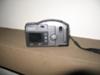
Kodak DC 210 
Great little camera. Only 1mp, but took good images.
2x zoom lens 29-58mm; f/4.0-4.7. Not the fastest, but not bad for its time. Compact flash media, …
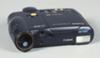
Canon XapShot
1992 I purchased a Canon XapShot RC-250, a still video capture camera and I was hooked.
The Canon XapShot RC-250 was before the advent of digital photography, …
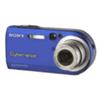
It was a Sony P100.
I was ree-e-eeally happy, because I got it for my birthday and I was hoping I would get it, but I was 13, that's understandable.
I had no idea how …
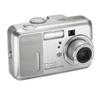
A Kodak EasyShare CX Series
I bought it back when I was in college, in February 2005, when I knew nothing about photography; my one and only focus was graphic design.
I think …
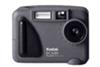
Kodak DC3200
It was a birthday gift and was bought as a complete package camera printer etc.
It has a long shutter lag but took surprisingly good photos considering …
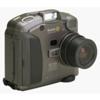
Kodak DC260 1.3 mp
I still have it and it works as good as when I bought it. It takes great photos and I've had a lot of fun with it.
It only holds 11 photos at its best …
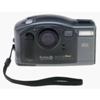
kodak dc 210
1 mp camera that captured decent pictures. used it to photograph many early pictures of my children and family.
(The Kodak DC210 was on sale from …
Nikon D50
I'd convinced myself before the D50 was given to me as a Christmas present that I would never go digital.
I was staying with film.
Boy was I wrong! …
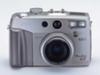
Canon G2
I still have this camera, which my mother now uses. She is 79 years old, and she very much enjoys this as well.
I plan on converting this to IR (Infrared) …
Sony Mavaca
It was a 320X240 pixel CCD model, recorded 8 photos on a floppy disc.
As I remember it, the price was $10,000! As an engineering tool, it revolutionized …

Fuji FinePix S602 Zoom Not rated yet
First affordable digital camera I could use for weddings back in 2000, paid $2,500, good buy at the time, 12 months later they went for $1,200 (Aust) so …
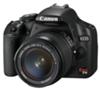
Canon Rebel T1i with EF-S 18-55 IS lens and EF 75-300 Telephoto AF lens Not rated yet
It is overall a very reliable sturdy camera, fast accurate autofocus and excellent performance in low light compared to other cameras in its price range. …
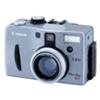
Canon G1 - 3.1 MP Not rated yet
I honestly don't remember exactly when I purchased this camera, but I am pretty sure it was around 1999 or 2000. I was looking for something good, that …
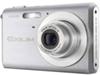
Casio EX-Z60 Not rated yet
It was good, it served its purpose and it took really high quality pictures for a camera that inexpensive and that small.
It had a couple problems …
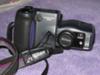
Nikon Coolpix 990 Not rated yet
Bought it from a friend for 500.00 It still was selling for 900.00 dollars in the stores at the time (2001) I got the batteries & charger and 2 memory …

Nikon D5000 Not rated yet
Got made redundant from work so I needed something to occupy my spare time.
I always fancied trying my hand at photography so bit the bullet and bought …

Sony DSC H50 Not rated yet
I bought my Sony DSC H50 last year. It has a 15X optical zoom, 9.1 megapixels, special nightshot mode to shoot pictures in complete darkness.
I'm …
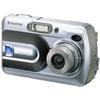
Fuji Finepix (I think it was called a Finepix).. Christmas 2005. Not rated yet
Three megapixels. Macro mode. 2.5 inch screen. Quite well featured, software included stitch for panoramas and various film effects. Took good quality …
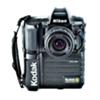
KODAK DCS 460 Not rated yet
Kodak DCS460 was a 6 megapixel DSLR which I purchased in 1996. It was the first digital camera I had used that allowed me to shoot people as it was a one …
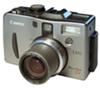
Canon G1 Not rated yet
It was a 3 megapixel point and shoot that provided manual camera control and a hot shoe flash mount. It also had a rotating display that allowed the framed …
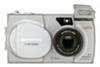
Olympus C200Zoom Not rated yet
The Olympus C200 Zoom was a 3 megapixel camera I bought in 2002.
It cost a fortune, around 400 in today's money.
It had a small display, a couple …
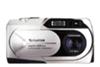
Fuji 1400Z Not rated yet
1 megapixel. 3x zoom (eqv 35 - 100 mm).
Flimsy memorycard of at most 64mb capacity
Was actually quite neat but with limited resolution. On a good …
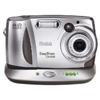
Kodak easy Share Not rated yet
All my friends had 1MP cameras when I decided to take the plunge and get one. Kodak had just came out with 2MP camera.
I was thrilled with all the …
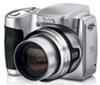
Kodak 710 and a creative webcam go Not rated yet
Creative webcam go was my first digital camera, it was a webcam that also took 320x480 pictures didn't need to be connected to computer.
My first True …
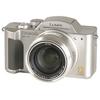
Panasonic DMC-FZ1 Not rated yet
My first digital camera, what you would call today a "bridge" camera. I don't remember when I bought it but it had an amazing zoom range (about 35mm-ish …
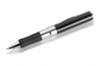
Pen Camera from Home Shopping Network Not rated yet
Took 2 AAA batteries. 24 exposures only, then you had to upload them to your computer. No memory card.
I was hooked at the excitement of seeing …
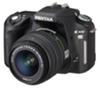
Pentax K100D (have previously had digital compacts) Not rated yet
(I read the question wrong and spoke about my first film slr! (sorry)
I only brought this digital SLR a year an a half ago - I couldn't really afford …
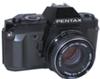
Pentax P30n Not rated yet
I still have this camera - it's gathering dust on a shelf but I have no plans to get rid of it!
I did try it recently as I have been shooting 120mm …
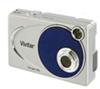
Vivitar really small Not rated yet
This camera was a carry around, and I know it had to cost less than 20 bucks, but it was my first Digital camera.
I thought I was in the big time because …
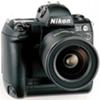
Nikon D-1 Not rated yet
My first experience with digital was using an original Nikon D-1. It was a conversion to digital for a newspaper where I shot as a freelancer.
I was …
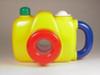
Playschool, Flickr Not rated yet
It was an amzing camera. You didn't have to go anywhere to create amazing wildlife panographic photographs.
All you had to do was click the 'shoot' …
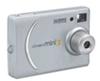
Mustek Gsmart mini 3 Not rated yet
Bought in 2003. Very small camera, with no flash. Had 2 megapixel CCD, 3.2 MP with interpolation.
It was just an experimental camera that I bought, …
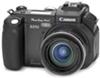
Cannon PowerShot Pro1 Not rated yet
I was surprised about the quality.
Pro 1; great lens, shoots fast, great zoom, IS works perfectly, screen probably best - even if sunny you still see …

Canon a400 Not rated yet
Great starter camera easy to use and convenient to carry in your purse.
3.2 megapixels
The Canon PowerShot A400 was launched towards the end …
Kodak, Z1 I guess, semi-professional 2005 Not rated yet
It was a Kodak semi-professional, 5mpx, 35-380 lens, automatic, semi-automatic and manual functions.
Pretty good, loved playing with the manual functions. …
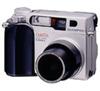
Olympus Camedia 2000 Not rated yet
2 megapixel, no manual settings, 3x zoom.
It was an OK camera in its time, but cannot be compared to the cheapest model of today.
The Olympus …
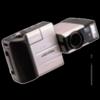
Nikon Coolpix 900 Not rated yet
My first digital camera was a Nikon Coolpix 900. The thing I liked about it was that it swivelled. The lens part and the camera part were sort of separate. …
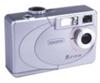
Jenoptik ? Not rated yet
My first digital camera was a Jenoptik. I can't remember the exact model number, but I bought it in 2001.
I remember buying it more as a toy than a …
Or, if it hurts your ears as much as it does mine, pass the link on to someone who'll really appreciate it.
 Get help using your camera with the complete Digital SLR Guide |