Beginners Photography -
Low Light and Indoor Photography
This section
of the site concentrates on beginners photography.  | This site is dedicated to helping everyone to take better photos, so
what makes this section different? Well, the information here is written with the beginner in mind. For example, you'll find many 'tooltips' among these pages, giving you, the reader extra information about specific photographic terminology. The tooltips are underlined with a dotted line. Simply hover your mouse over the word(s) to get some extra information. |
Low Light and Indoor Photography
By
Many
people encounter events where there is a great deal of activity and
motion, but all in an environment of low lighting, such as a wedding
or reception.
Beginners Photography - Avoid Using
Flash:
While many people might automatically say
“use the flash”, this isn't a very good idea.
In fact there
are some locations and events that expressly forbid the use of flash
photography. This includes museums and theaters as well as special
or religious events.
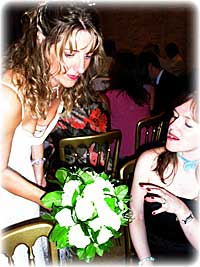
During
all such moments, the flash will over illuminate the scene,
eliminating the background entirely and brightly lighting a portion
of the subject. (have a look at the example to the right here to
see the result of flash over illuminating a photo)
This
is a perfect occasion for red eye and poor results. It can also
cause the flash to be recorded in the glass of windows as well as
eyeglasses, which completely ruins even the nicest image.
Beginners Photography - What Can a
Photographer Do?:
How
does a photographer capture images in such low light?
With a
digital camera, a photographer can access a wide range of techniques
that can allow for successful photography in such a challenging
environment.
Beginners Photography - Make Use of ISO Settings:
The first place to begin is with the camera's ISO setting.
In film photography the ISO is determined by the physical film placed inside of the camera, which directs the kind of images the photographer can capture. For example, the “standard” film speed for most purposes is a 400 ISO, while the higher film speeds such as 800 and 1200 ISO are intended for action photography.
People who frequently attend sporting events, or who photograph wildlife such as hummingbirds or insects rely on the higher speeds.
Today those same numbers apply to the ISO
settings on a digital camera. The old concept of “film sensitivity”
now applies to the light sensitivity of the digital camera's sensor,
which records the images captured by the photographer.
Beginners Photography - Things to Consider About
ISO:
There is a problem
with the digital ISO however – noise. This term refers to the
graininess of high ISO images taken in the digital format.
 Luckily there are now
editing software programs that specifically eliminate noise and
sharpen a photograph taken under questionable conditions.
Luckily there are now
editing software programs that specifically eliminate noise and
sharpen a photograph taken under questionable conditions.
This should be something any photographer keeps in mind
however, because low light photography also requires a slower
shutter speed, and this can present problems from “hand shake”.
It is a good idea to consider what affects the settings will
have and try to address them before taking a
picture.
Beginners Photography - Other Things to
Consider:
For this example, a high ISO and slow
shutter speed may require the photographer to consider a tripod,
especially if the images are for a special event like a wedding.
In this way, group photographs are completely possible in
the low light setting.
(The photo here was taken without
flash. The high level of 'grain' was reduced using
software)
Apart from camera
settings most photographers can rely on ambient lighting and any
side, reflective or diffused light to help them capture images
effectively in a low light
environment.
More beginners photography articles!
- Beginners Photography - The Basics
- Capturing Moving Water
- Shooting the Night Sky
- Editing Images in Photoshop
- Low Light and Indoor Photography
- How digital cameras work - understanding light and sensors
- Getting More Light on Indoor Photographs
- Learning digital photography

|
This page was written by my good friend Amy Renfrey. For a steady supply of Amy's tips, have a look at her professionally tailored ebooks and ezines, written especially for beginner photographers. |
Subscribe to my monthly newsletter, "Stay Focussed". You'll get even more digital photography tips and get to know about the latest updates to the site.
Go to the Stay
Focussed newsletter signup page
(opens in new window)
Or, if it hurts your ears as much as it does mine, pass the link on to someone who'll really appreciate it.
 Get help using your camera with the complete Digital SLR Guide |